By Briana Seftel
Mexico’s Yucatan peninsula is home to a dazzling array of Mayan ruins, both large and small. Discover one or more when you travel to Mexico with this helpful guide!
View vacation packages to Mexico
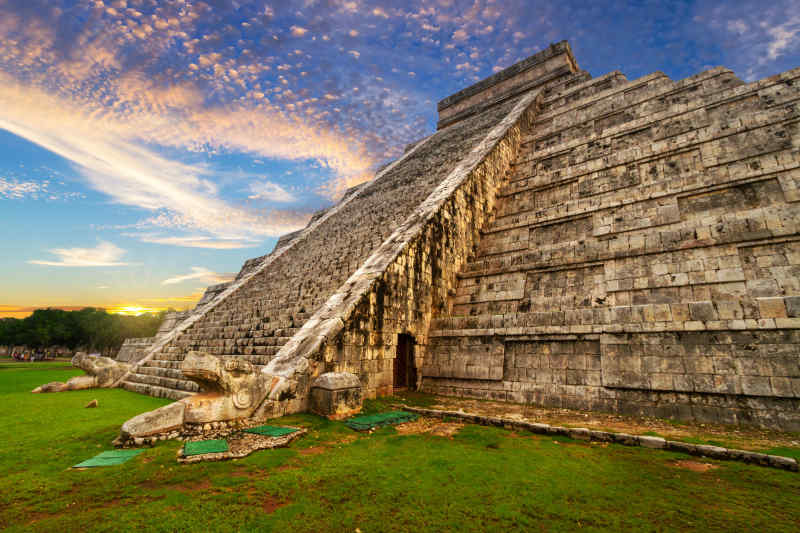
Chichen Itza
As a UNESCO World Heritage Site in Mexico and one of the “New Seven Wonders of the World,” Chichen Itza is an absolute must on a trip to the Yucatan. Arrive when it opens at 8am and discover this expansive Mayan city, built during the Classic period and abandoned during the 15th century.
The focal point of Chichen Itza is El Castillo pyramid, also known as the Temple of Kukulkan. During the spring and autumn equinoxes, the sun creates the illusion of a snake ascending or descending the 365 steps. On your visit, you may also notice people clapping in front of the pyramid - no, they’re not just excited, but rather clapping to hear the echo that sounds like a quetzal bird chirping!
Other highlights include the Great Ball Court (the largest in the Americas), Observatory, and Sacred Cenote, where human sacrifices took place.

Coba
Climb 130 steps to the top of the pyramid of Coba, home to the tallest Mayan structure in the Northern Yucatan. Located 45 minutes from Tulum, this site is a popular excursion for those wanting adventure as well as history. Walk or rent a bike to follow the tree-lined path to the pyramid, then make the ascent to the top. Admire breathtaking views from above, take a few selfies, then carefully descend the steep steps. While climbing the pyramid may be difficult for some, there are also plenty of other interesting ruins to explore either on your own or with a guide.
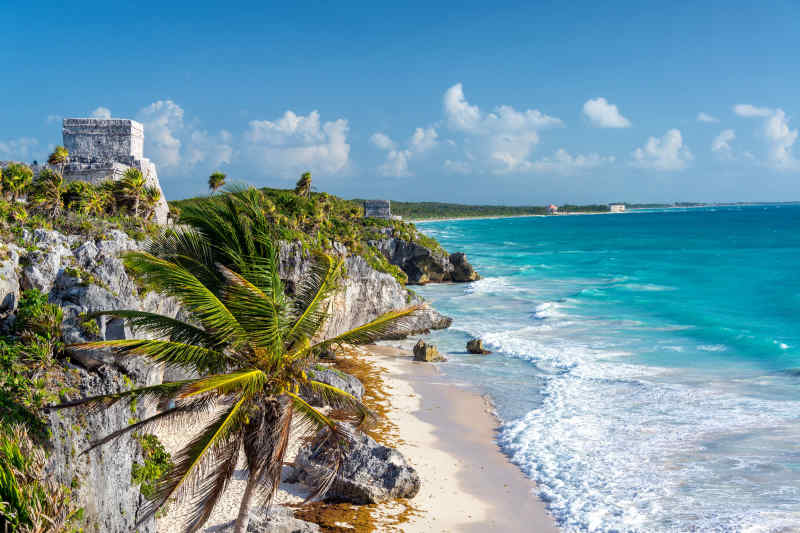
Tulum
Perhaps the most dramatically situated Mayan ruins in all of Mexico, Tulum sits right on the edge of a cliff bordering the bright blue Caribbean, and was one of the last cities built by the Mayans. A visual feast for the eyes, the ruins were built to honor the planet of Venus, and was one of the few walled cities. Look out for the Temple of the Descending God, the Temple of the Frescoes, and the Castillo. You might even come across a few resident iguanas basking in the sun!
If weather conditions are good, you can descend a staircase down to Paradise beach, considered one of the best beaches in the Riviera Maya.

Uxmal
Meaning “three times built,” Uxmal - pronounced oosh-mahl - is another popular UNESCO certified archaeological site located on the western side of the Yucatan. Built in the Puuc style, Uxmal is laid out in relation to astronomy, as opposed to being laid out geometrically. Its most recognizable building is the Pyramid of the Dwarf, also known as the Pyramid of the Magician. Legend says that a magical dwarf built the pyramid in one night.
Uxmal is part of the "Puuc route" of Mayan sites, along with nearby Sayil, Kabah, Xlapak, and Labná.
Ek Balam
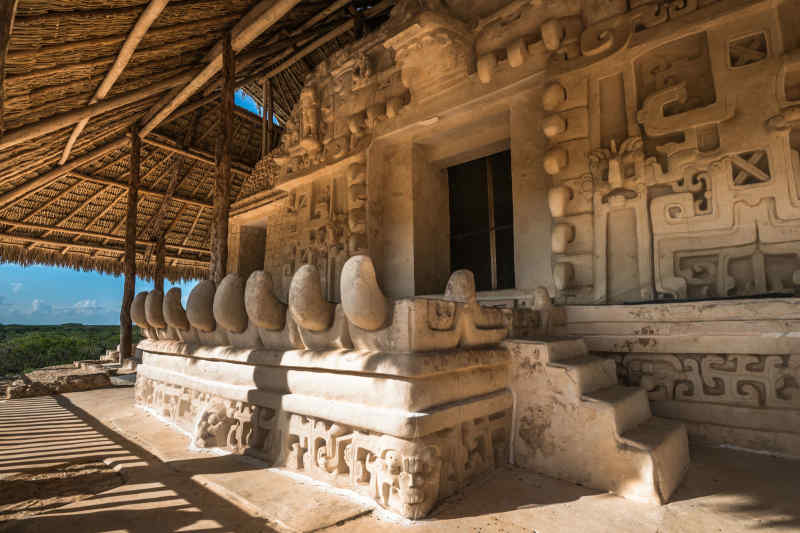
Architecture nerds will geek out over the intricate carvings of Ek Balam, located 16 miles north of the city of Valladolid. Translating to “the black jaguar,” these ruins are among the best-preserved ruins in the region. Unlike other Mayan sites, the facade of Ek Balam was constructed of stucco and limestone mortar, rather than stone. Wander through the jungle-covered ruins and climb to the top of the 95-foot Acropolis pyramid for a good workout and amazing views. You might want to combine the ruins with the nearby Cenote Maya Park for a great day trip.
Calakmul
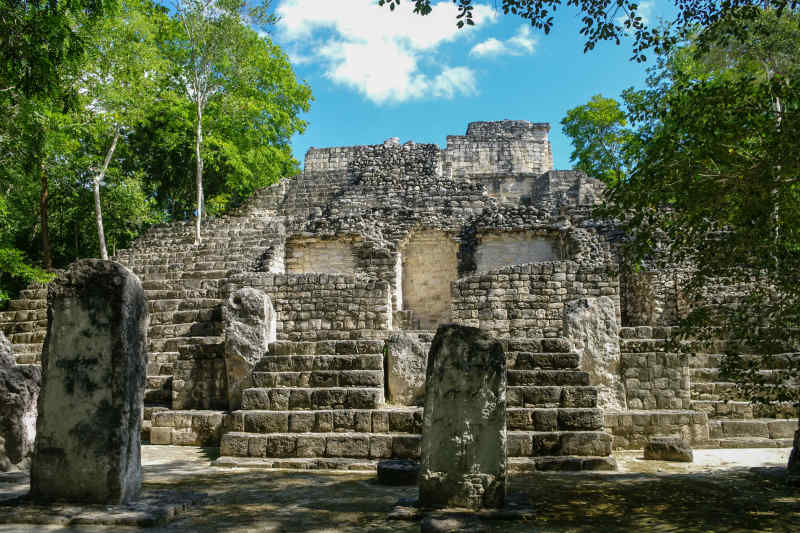
If crowds aren’t your thing, these off-the-beaten-path ruins are the place to be. Located in the state of Campeche, Calakmul is set deep in the Tierras Bajas forest, and only 22 miles from the Guatemala border. Like Coba and Ek Balam, visitors can climb to the top of two steep pyramids.
Aside from its ruins, the area is home to over 230 species of birds, monkeys, turkeys, and more. You’ll want at least an entire day exploring this remote and protected area.