By Dianne Sindayen ✔ Reviewed by travel expert Ben Braude
Six and a half centuries of Habsburg rule turned Vienna into one of Europe's richest museum cities.
The Imperial art collection alone fills two enormous twin buildings facing each other across Maria-Theresien-Platz.
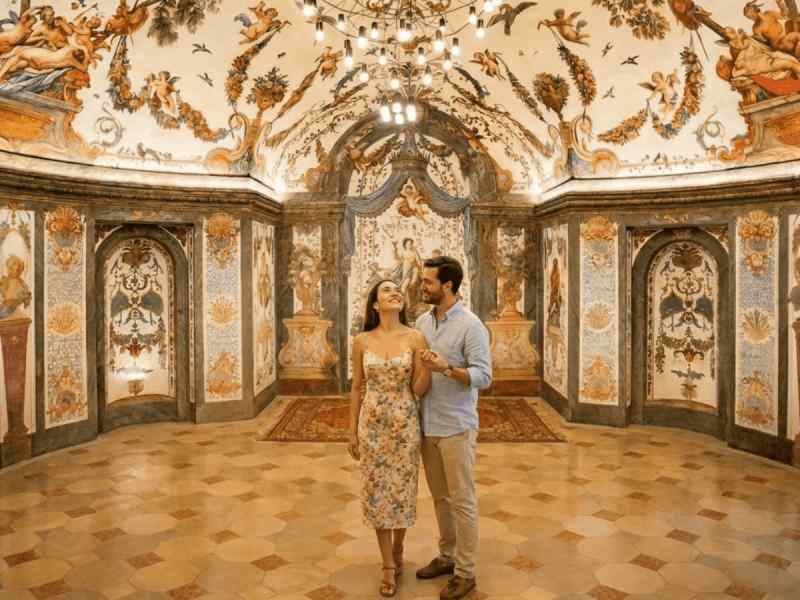
Add the private collections, the personal apartments of Mozart and Freud, and the sprawling MuseumsQuartier, and the result is a museum roster deeper than almost any other European capital. Nine of the best are covered below, from the unmissable to the unexpectedly personal.
Planning a trip to Vienna is easier than most people expect. Great Value Vacations offers curated Vienna travel packages that take care of the details so you can focus on the experience.
Why Vienna Has More Museums Than Most European Capitals
A few reasons Vienna's museum scene is one of the deepest in Europe:
- Habsburg legacy: Nearly 650 years of imperial collecting left Vienna with one of the world's richest concentrations of art, antiquities, and decorative objects.
- Compact and walkable: Most major museums sit inside or just off the Ringstrasse, the boulevard ring around Vienna's historic 1st district. A dedicated museum day can cover four on foot.
- The MuseumsQuartier is enormous: At 90,000 square meters, MQ is one of the 10 largest cultural complexes in the world, with the Leopold Museum, MUMOK, Kunsthalle Wien, and the architectural Q21 all under one address.
- Personal museums for major residents: Vienna preserves the actual apartments of Mozart, Beethoven, Schubert, Haydn, Strauss, and Freud as small house museums. Most European capitals would consider preserving even one a coup.
Many free or low-cost options exist. Most museums offer free entry on the first Sunday of the month, and the Vienna Pass covers about 70 attractions including all of the museums below. Pair the visits with our broader roundup of things to do in Vienna for the rest of the city.
Vienna Museums at a Glance
A quick reference for matching each museum to your interests:
| Museum | Type | Best for | Cost |
|---|---|---|---|
| Kunsthistorisches | Old Masters art | Vermeer, Bruegel, Caravaggio | $$ |
| Belvedere | Austrian art | Klimt's "Kiss," Schiele | $$ |
| Albertina | Drawings + Modern | Dürer, Monet, Picasso | $$ |
| Leopold Museum | Vienna Secession | World's largest Schiele collection | $$ |
| Sisi Museum | Imperial history | Habsburg court, Empress Elisabeth | $$ |
| Sigmund Freud Museum | Psychoanalysis history | Freud's actual consulting room | $ |
| Haus der Musik | Interactive music | Families, music lovers | $$ |
| Mozarthaus Vienna | Personal apartment | Mozart fans, classical music | $ |
| Naturhistorisches | Natural history | Families, prehistoric art, dinos | $$ |
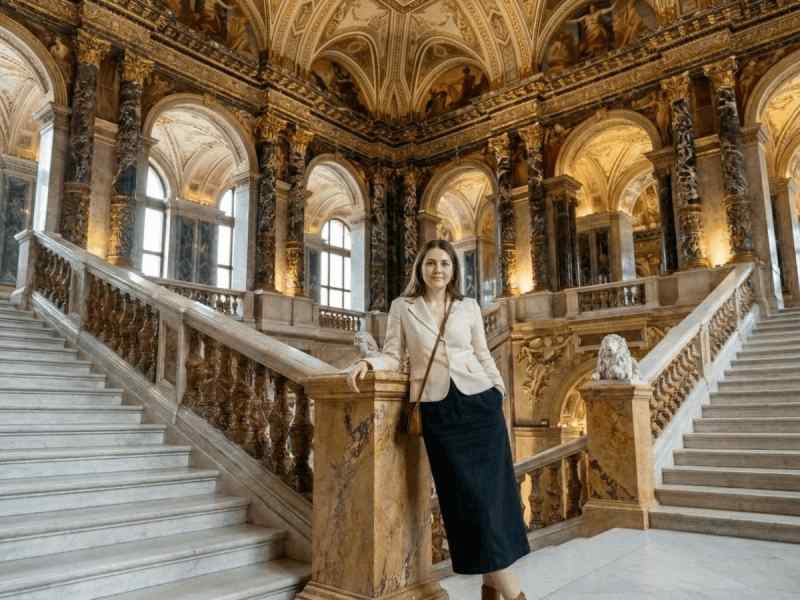
1. Kunsthistorisches Museum (Museum of Art History)
The Kunsthistorisches Museum, opened by Emperor Franz Joseph in 1891 to house the Habsburg art collection, is one of the great art museums of the world. The Italian Renaissance and Flemish Baroque galleries hold works by Vermeer, Caravaggio, Raphael, Titian, and Velázquez, and the museum has the largest Bruegel collection on Earth.
What Makes It a Must-See: Vermeer's "The Art of Painting" (1666), Bruegel's "Hunters in the Snow" and "Tower of Babel," and the Caravaggio rooms. The Egyptian and Greek/Roman antiquities collections are also among the most important in Europe. Standing in the Bruegel room with six of his greatest paintings within arm's reach is not something that happens anywhere else on Earth.
While You're Here: Have coffee under the museum's spectacular central dome at the Cupola Hall café. The dome is decorated with allegorical paintings by Gustav Klimt and Franz Matsch, and the café tables sit directly underneath. Allow at least two hours for the main galleries. Three is more comfortable.
Find It Here: Maria-Theresien-Platz, 1010 Vienna.
How to Get There: U-Bahn U2 to Museumsquartier or U3 to Volkstheater, then a five-minute walk. Trams 1, 2, D, and 71 stop at Burgring.
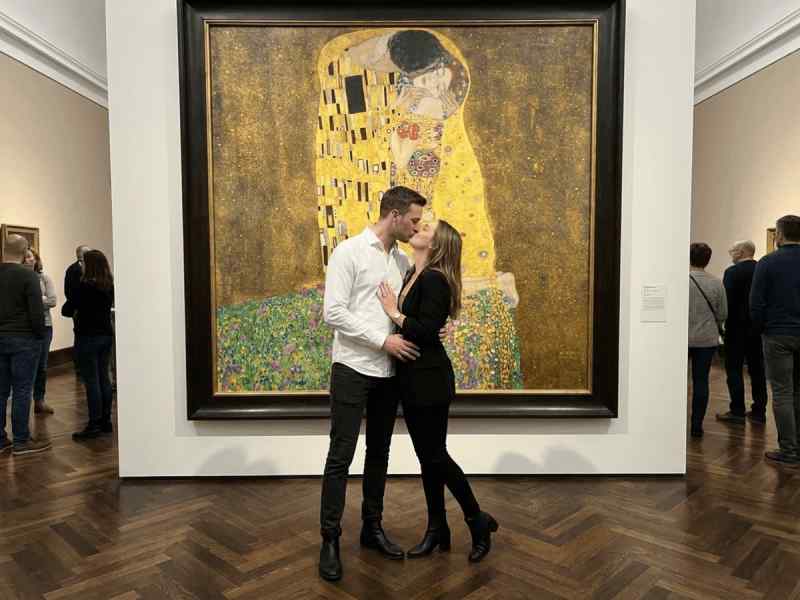
2. Belvedere Palace
The Belvedere Palace, built between 1714 and 1723 as the summer residence of Prince Eugene of Savoy, holds Austria's most important art collection. The Upper Belvedere houses Gustav Klimt's "The Kiss" (1908 to 1909), the most famous painting in Austria, plus the world's largest collection of Egon Schiele and works by Oskar Kokoschka, Caspar David Friedrich, and Claude Monet.
What Makes It a Must-See: "The Kiss" hangs in its own dimly lit room and draws a constant crowd. The Baroque palace itself, with gilt mirrors and painted ceilings, is part of the experience. The gold leaf on "The Kiss" changes color depending on where you stand. Most visitors leave before they notice.
While You're Here: Walk through the Baroque gardens between the Upper and Lower Belvedere. The sightline from the Upper Belvedere terrace toward St. Stephen's Cathedral is one of Vienna's best free views. The Upper Belvedere alone needs 90 minutes. Add the Lower Belvedere and gardens and plan for a half day.
Find It Here: Prinz-Eugen-Strasse 27, 1030 Vienna (Upper Belvedere). Rennweg 6 for the Lower Belvedere.
How to Get There: Tram D to Schloss Belvedere stops directly outside the Upper Belvedere. U-Bahn U1 to Hauptbahnhof is a 10-minute walk away.
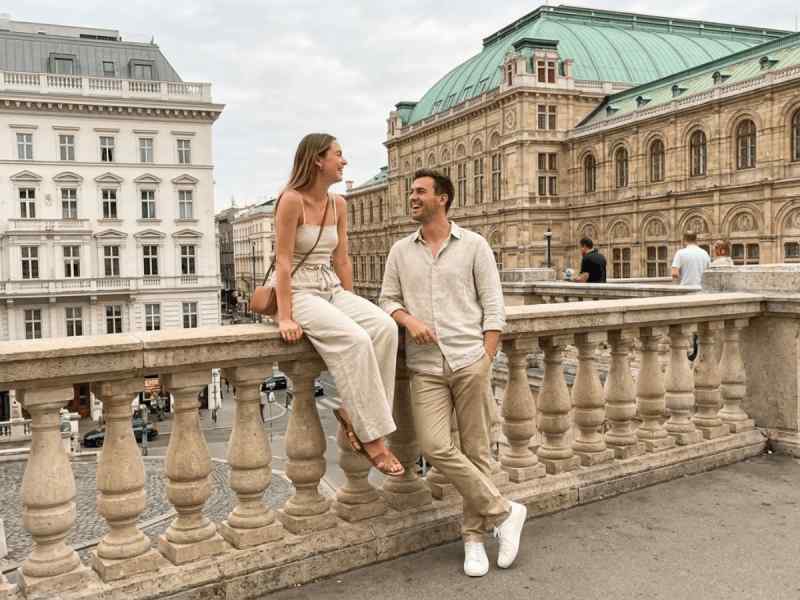
3. Albertina Museum
The Albertina Museum, founded in 1776 by Duke Albert of Saxe-Teschen as a private graphic art collection, holds one of the world's most important collections of prints and drawings, including Dürer's famous watercolor "Young Hare" (1502) and "Praying Hands." The museum also has a permanent Monet-to-Picasso modern wing (the Batliner Collection), with major works by Monet, Renoir, Degas, Picasso, Chagall, and Toulouse-Lautrec.
What Makes It a Must-See: The combination of Old Master drawings and 19th- and 20th-century paintings, all in the former Habsburg state apartments. The State Rooms themselves, restored to their original 1800s decoration, are equally worth seeing. Dürer's "Young Hare" is smaller than most people expect and more astonishing for it.
While You're Here: Catch the rotating exhibitions on the lower floors. The Albertina runs several major temporary shows each year, often focused on a single 19th- or 20th-century master. The permanent collection and State Rooms take about 90 minutes. Add an hour for a major temporary show.
Find It Here: Albertinaplatz 1, 1010 Vienna, behind the State Opera.
How to Get There: U-Bahn U1, U2, or U4 to Karlsplatz, then a five-minute walk. Tram D, 2, or 71 to Kärntner Ring/Oper.
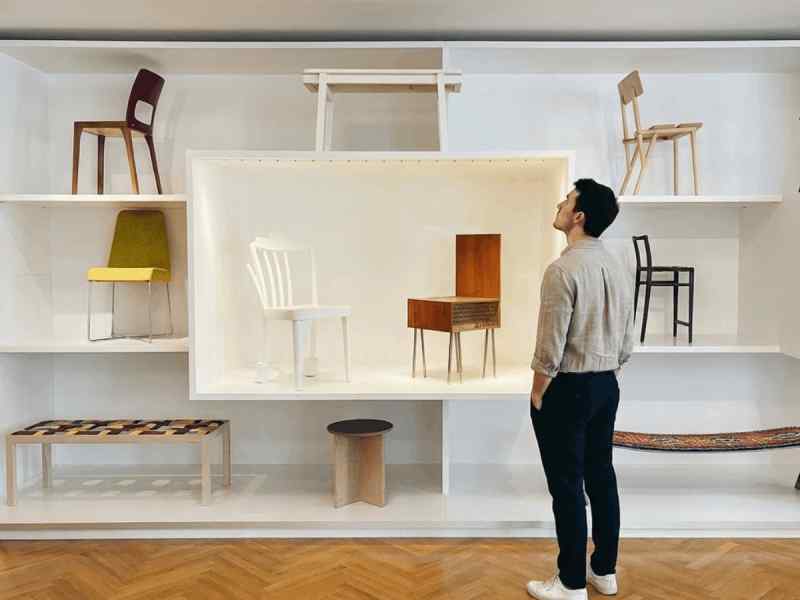
4. Leopold Museum (MuseumsQuartier)
The Leopold Museum, part of the sprawling MuseumsQuartier cultural complex, holds the world's largest collection of works by Egon Schiele (over 200 paintings, drawings, and watercolors), plus significant pieces by Gustav Klimt, Oskar Kokoschka, and Richard Gerstl. The collection was assembled by ophthalmologist Rudolf Leopold over five decades and opened to the public in 2001.
What Makes It a Must-See: Schiele's "Cardinal and Nun" and "Self-Portrait with Chinese Lantern Plant" are highlights, alongside Klimt's "Death and Life" and several stunning Wiener Werkstätte furniture pieces. The clean limestone-cube architecture is also part of the visit. Schiele's self-portraits have a quality that reproductions completely fail to capture. The originals are unsettling in a way that stays with you.
While You're Here: Pair the visit with another MuseumsQuartier museum. The MUMOK contemporary art museum, Kunsthalle Wien, and the smaller ZOOM Children's Museum all sit in the same complex. The Leopold alone needs 90 minutes for the Schiele collection. A full MQ half day covers Leopold plus one other museum comfortably.
Find It Here: Museumsplatz 1, 1070 Vienna.
How to Get There: U-Bahn U2 to Museumsquartier (entrance directly inside the station), or U3 to Volkstheater and walk three minutes.
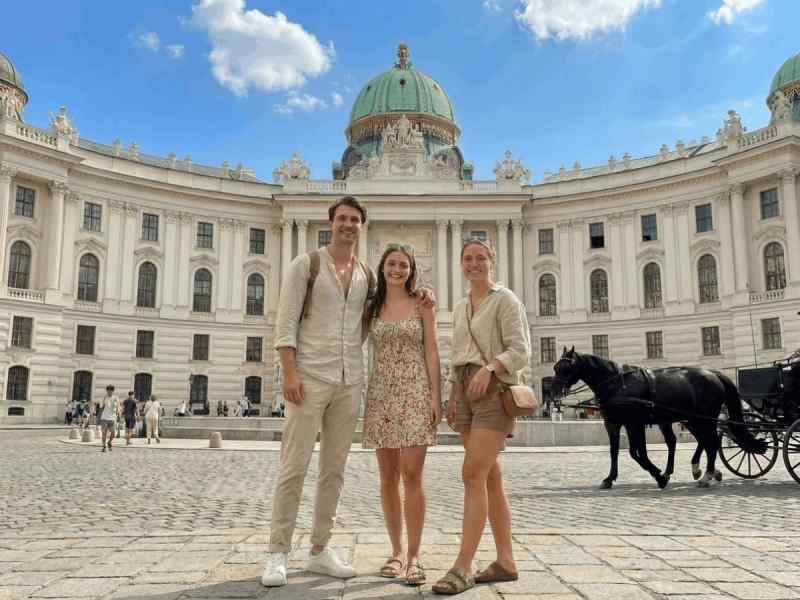
5. Sisi Museum at the Hofburg
The Sisi Museum, set within the Imperial Apartments at the Hofburg Palace, tells the life story of Empress Elisabeth of Austria (1837 to 1898), known affectionately as Sisi. More than 300 personal objects are displayed across six themed rooms, including her famous black mourning fan, replicas of her gowns, her travel cosmetic case, and the file used in her assassination in Geneva in 1898.
What Makes It a Must-See: The visit combines the museum, the actual Imperial Apartments where Franz Joseph and Sisi lived, and the Imperial Silver Collection. The full audio-guided circuit takes about two hours and gives one of the most complete pictures of late Habsburg court life anywhere. The file used to assassinate Empress Elisabeth in Geneva in 1898 is on display. A small object to end an empire's era with.
While You're Here: Do not skip the Imperial Silver Collection at the start of the tour. The Habsburg banquet sets, including 17,000-piece dinner services and emperor-only gold table services, are extraordinary in their own right. The full audio-guided circuit of the Silver Collection, Sisi Museum, and Imperial Apartments takes about two hours.
Find It Here: Hofburg Palace, Michaelerkuppel, 1010 Vienna.
How to Get There: U-Bahn U3 to Herrengasse, then a five-minute walk. Tram 1, 2, D, or 71 to Burgring.
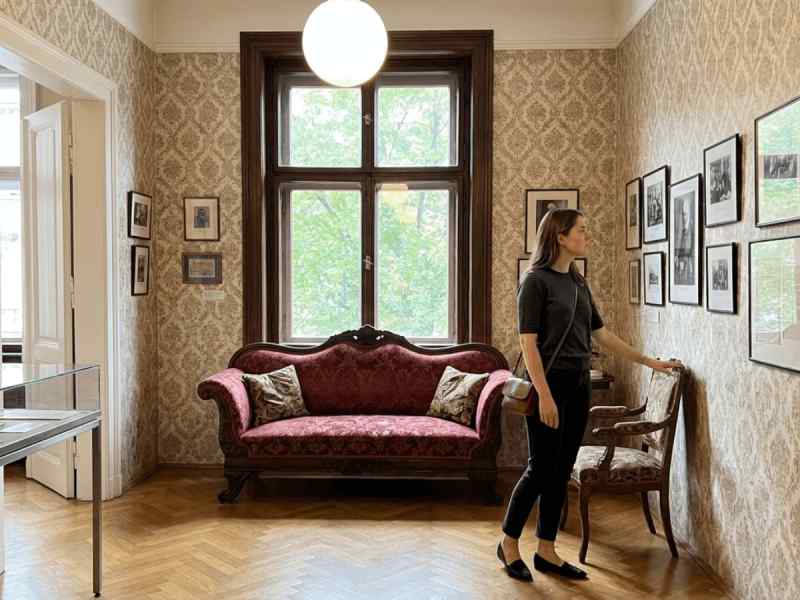
6. Sigmund Freud Museum
The Sigmund Freud Museum occupies the actual apartment and consulting rooms at Berggasse 19, where Sigmund Freud lived and worked from 1891 to 1938. This is where psychoanalysis was developed, where Freud wrote "The Interpretation of Dreams" (1900), and where he treated patients until he fled the Nazis for London. The museum reopened in 2020 after a major restoration.
What Makes It a Must-See: Standing in Freud's actual waiting room and seeing the consulting room where Anna O., the Wolf Man, and the Rat Man were treated is a uniquely intellectual experience. The museum also holds first editions, Freud's personal letters, and a partial recreation of his antiquities collection (now mostly in the Freud Museum London).
While You're Here: Visit the basement-level archive and reference library if you have time. It is one of the most extensive psychoanalysis archives in the world. The main apartment and consulting rooms take about 45 minutes. Small and focused, it pairs well with a morning visit to a larger museum nearby. The waiting room still has the original coat hooks. That detail, more than anything else, makes the whole thing feel real.
Find It Here: Berggasse 19, 1090 Vienna.
How to Get There: U-Bahn U2 to Schottentor, then a five-minute walk north. Tram D, 1, 37, 38, or 41 to Schlickgasse.
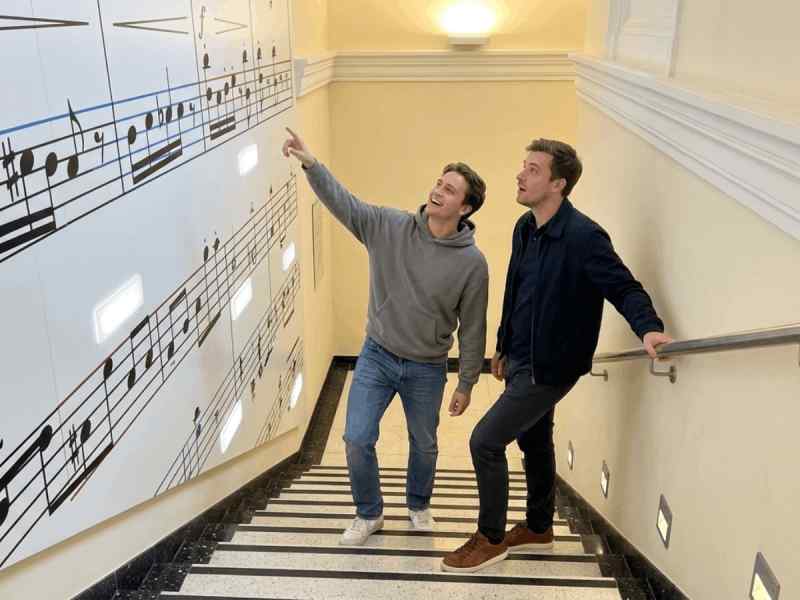
7. Haus der Musik (House of Music)
Haus der Musik (House of Music), opened in 2000 in the former palace of Archduke Carl, is Vienna's interactive music museum. Five floors trace the city's musical history from Mozart and Beethoven through Mahler and Strauss to the modern Vienna Philharmonic, with hands-on exhibits, sound experiments, and a "Virtual Conductor" station where you lead a digital orchestra.
What Makes It a Must-See: The Sonosphere on the sensory floor is genuinely surprising for adults, with interactive sound chambers that let you experience music differently. The Vienna Philharmonic floor includes the only museum of the orchestra's history, with original scores and instruments. It is the rare museum where the adults are as reluctant to leave as the children.
While You're Here: The Virtual Conductor on the fourth floor is the headline experience. Pick up the baton and conduct the Vienna Philharmonic on a giant screen. If you go too fast or too slow, the orchestra stops playing and the musicians complain in their own voices. Allow two hours minimum. Three if you linger on the interactive floors, which most people do.
Find It Here: Seilerstätte 30, 1010 Vienna.
How to Get There: U-Bahn U1, U2, or U4 to Karlsplatz, then a six-minute walk. Tram 2 to Schwarzenbergplatz.
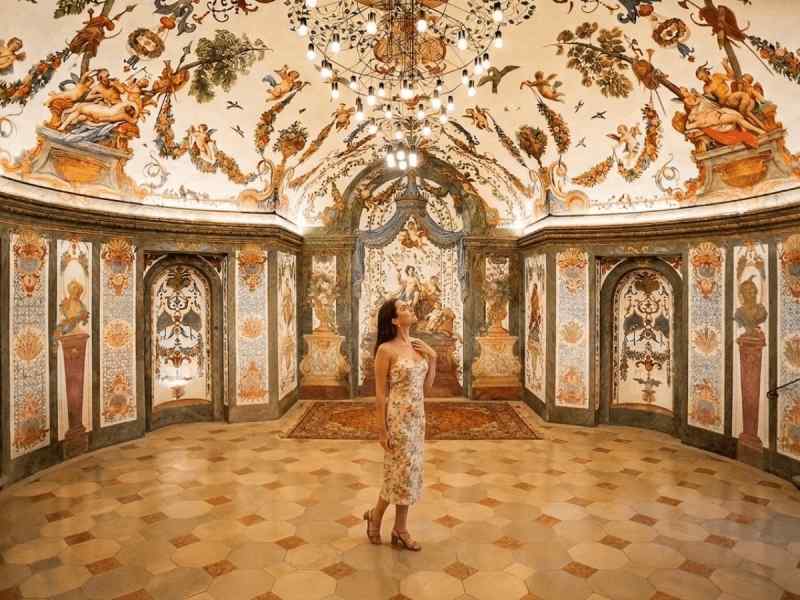
8. Mozarthaus Vienna
Mozarthaus Vienna is Wolfgang Amadeus Mozart's only surviving Vienna residence, the apartment at Domgasse 5 where he lived from 1784 to 1787 and composed "The Marriage of Figaro" (1786) and parts of "Don Giovanni." The museum spreads across three floors: Mozart's actual apartment on the first floor, plus interpretive galleries above and below.
What Makes It a Must-See: Standing in the actual room where Mozart composed "The Marriage of Figaro" is a unique experience. The first-floor restoration is sparse but accurate to the 18th century, and the upper floors trace Mozart's Vienna years in detail, including his rivalry with Salieri and his relationship with the Freemasons. The apartment is almost entirely empty of furniture. The music through the audio guide fills the space differently because of that.
While You're Here: Walk one block to St. Stephen's Cathedral afterward. Mozart was married there in 1782, and his memorial service was held there in 1791. The museum takes about 60 to 75 minutes. Compact enough to combine with the Albertina or Haus der Musik in the same afternoon.
Find It Here: Domgasse 5, 1010 Vienna, directly behind St. Stephen's Cathedral.
How to Get There: U-Bahn U1 or U3 to Stephansplatz. The museum is two minutes east of the cathedral on foot.
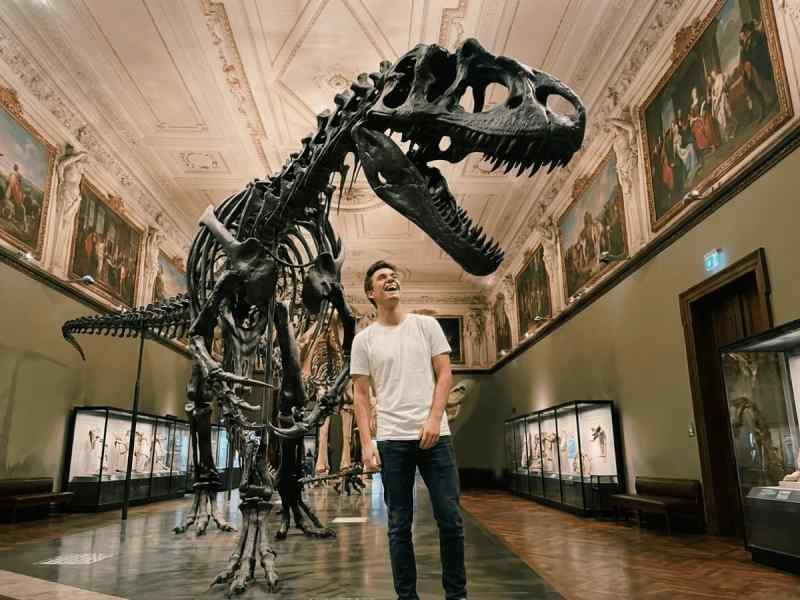
9. Naturhistorisches Museum (Natural History Museum)
The Naturhistorisches Museum (Natural History Museum), the twin building of the Kunsthistorisches directly across Maria-Theresien-Platz, opened in 1889 and holds one of Europe's most important natural science collections. Highlights include the Venus of Willendorf, a 29,500-year-old fertility figurine carved from limestone (the oldest object on permanent display in Vienna), one of the largest dinosaur skeletons in Europe, and an outstanding meteorite collection.
What Makes It a Must-See: The Venus of Willendorf alone, sitting in her own glass case after being discovered in 1908 in Lower Austria, justifies the visit. The mineral and gemstone galleries, with imperial-era display cases unchanged in 130 years, feel like stepping into a museum about museums. The Venus of Willendorf is 4.4 centimeters tall and 29,500 years old. The case around her is bigger than she is. That contrast is the whole point.
While You're Here: Visit the rooftop terrace, accessible by guided tour. The view from the dome looks straight across at the Kunsthistorisches and toward the Hofburg. The main highlights, including the Venus of Willendorf and dinosaur hall, take about 90 minutes. The full museum needs half a day.
Find It Here: Burgring 7 / Maria-Theresien-Platz, 1010 Vienna.
How to Get There: U-Bahn U2 to Museumsquartier or U3 to Volkstheater, then a five-minute walk. Trams 1, 2, D, and 71 stop at Burgring.
Plan Your Vienna Museum Trip
The best museums in Vienna reward a planned approach. Spend a morning at the Kunsthistorisches, an afternoon at the Belvedere with Klimt's "Kiss," and a slower day at the personal museums of Mozart and Freud. Most of the museums to visit in Vienna are walkable from each other inside the Ringstrasse, and a Vienna Pass makes the math work easily across two or three days. Three full days of museum-going barely covers the headline collections, and Vienna has dozens more waiting after that.
Planning a trip to Vienna is easier than most people expect. Great Value Vacations offers curated Vienna travel packages that take care of the details so you can focus on the experience.
VIEW VACATION PACKAGES TO VIENNA