By Dianne Sindayen ✔ Reviewed by travel expert Ben Braude
Budapest is the only European capital built on top of more than 120 natural hot springs, and the city has been a bathing destination for almost 2,000 years.
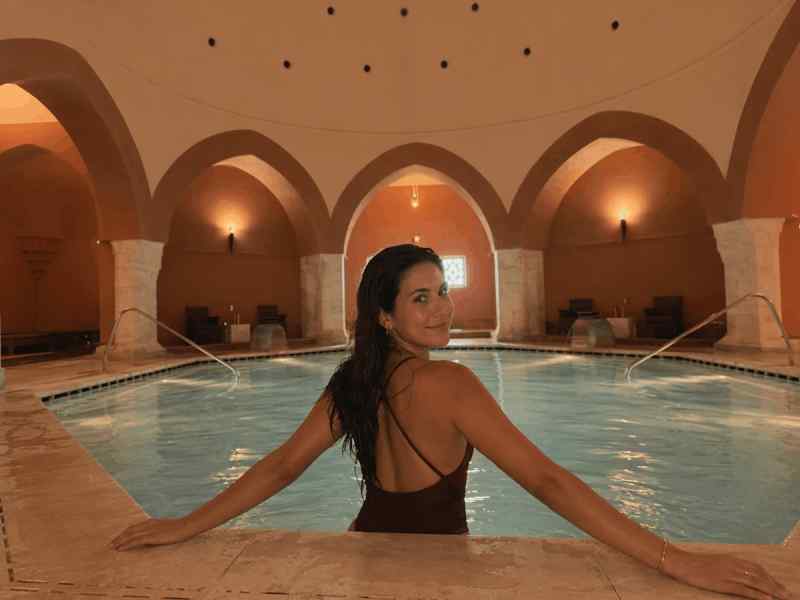
The Romans built the first baths here in the 2nd century. The Ottoman Turks added the iconic domed hammams in the 16th and 17th centuries. The Habsburgs built the Neo-Baroque and Art Nouveau palace baths still in use today. The historic Banks of the Danube and the Buda Castle Quarter have been on the UNESCO World Heritage list since 1987.
The nine baths below cover the full range, with prices, what to bring, and how to avoid the worst crowds.
Planning a trip to Budapest is easier than most people expect. Great Value Vacations offers curated Hungary vacation packages that take care of the details so you can focus on the experience.
Budapest Thermal Baths at a Glance
A quick read on how the nine baths fit your trip:
| Bath | Era | Best for | Typical day cost |
|---|---|---|---|
| Széchenyi | Habsburg, 1913 | Iconic outdoor pools, sparties | $$ |
| Gellért | Habsburg, 1918 | Art Nouveau interior | $$ |
| Rudas | Ottoman, 1550 | Rooftop Danube view | $$ |
| Király | Ottoman, 1565 | Small, intimate, historic | $ |
| Lukács | Habsburg, 1894 | Local favorite, less touristy | $ |
| Veli Bej | Ottoman, 1574 | Hidden Ottoman gem | $ |
| Palatinus | Habsburg, 1919 | Outdoor strand, families | $ |
| Dandár | Interwar, 1930 | Local-only neighborhood bath | $ |
| Aquaworld | Modern, 2008 | Family waterpark | $$ |
Why Budapest Is the World's Thermal Bath Capital
The baths are just one of the top reasons to visit Budapest, and a few more explain the bathing-capital reputation specifically:
- More than 120 active thermal springs: They produce around 70 million liters of hot water per day, with source temperatures from 21°C to 78°C.
- Three layered bath traditions: Roman (2nd century), Ottoman (1541 to 1686), and Habsburg (18th to 20th c.) bathing cultures all left intact baths still in operation today.
- UNESCO-listed historic setting: Most of the central baths sit inside the UNESCO-listed Banks of the Danube and Buda Castle Quarter, inscribed in 1987.
- Year-round outdoor pools. Even in January, the Széchenyi and Gellért outdoor pools stay at 36 to 38°C, so the steam rising into snowy air is part of the appeal.
- Genuinely affordable. Most baths charge 6,000 to 12,000 HUF (around 15 to 30 euros) for a full day, less than a single spa entry in Munich or Vienna.
1. Széchenyi Bath
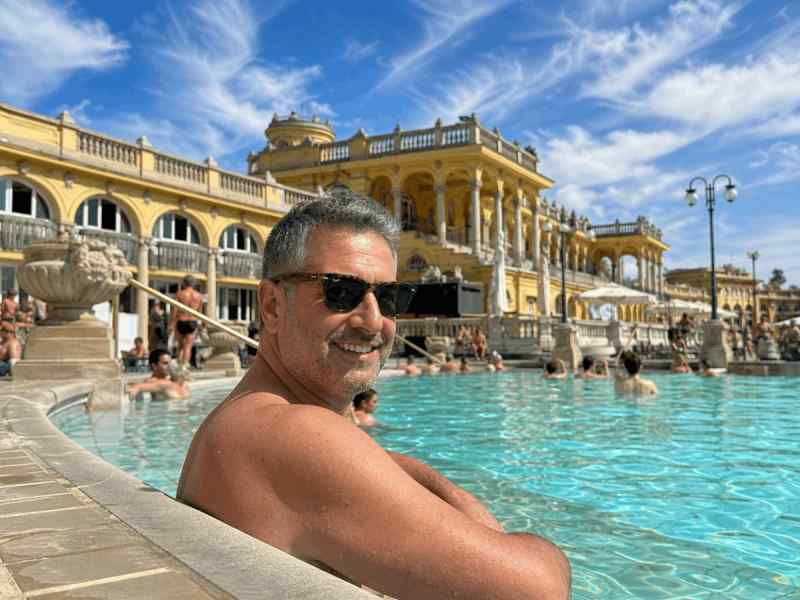
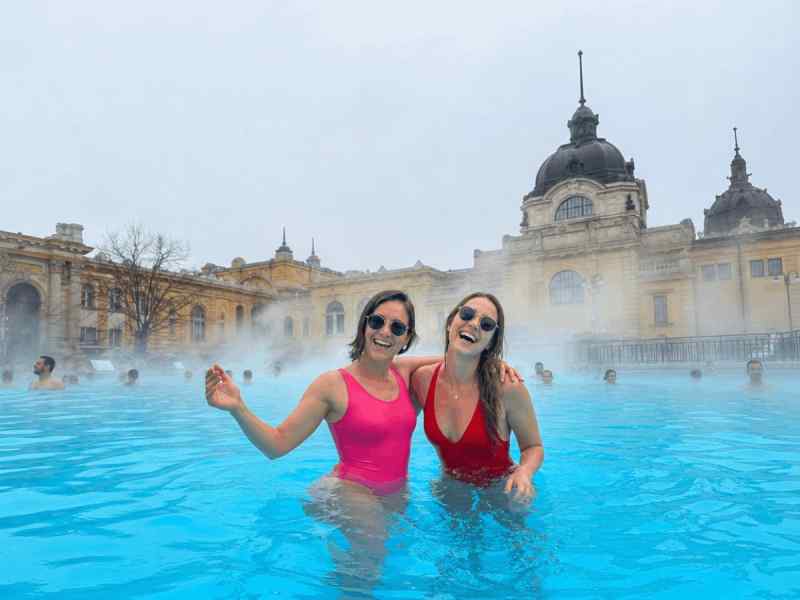
Széchenyi Bath, opened in 1913 in Budapest's City Park (Városliget), is the largest medicinal bath in Europe and the most-photographed spot in Budapest. The bright-yellow Neo-Baroque complex draws water from two thermal wells (74°C and 77°C at source) and feeds 18 pools in total, including the three iconic outdoor pools where steam rises into the air year-round. It is the bath most travelers visit first and the one that hosts the Saturday-night "sparties" with DJs and lights.
What Makes It Worth a Soak: Three large outdoor pools open year-round (one for swimming laps at 27°C, two for soaking at 30°C and 38°C), plus 15 indoor thermal pools and saunas. Day entry runs 9,400 to 12,000 HUF (around 23 to 30 euros) depending on the day.
What to Know Before You Go: Arrive at 9 a.m. weekdays to dodge the worst crowds. The outdoor chess players (men in their 60s and 70s playing in the 38°C pool) are a Budapest signature; you can watch but don't interrupt the games. Bring a bathing cap for the lap pool or rent one for around 1,500 HUF. In winter, the queues are shorter and the steam over the outdoor pools makes for one of Budapest's best cold-weather experiences.
Find It Here: Állatkerti körút 9-11, 1146 Budapest, in Városliget (City Park).
How to Get There: Take metro line M1 (the yellow line) to Széchenyi fürdő. The bath entrance is a 1-minute walk from the station exit.
2. Gellért Bath
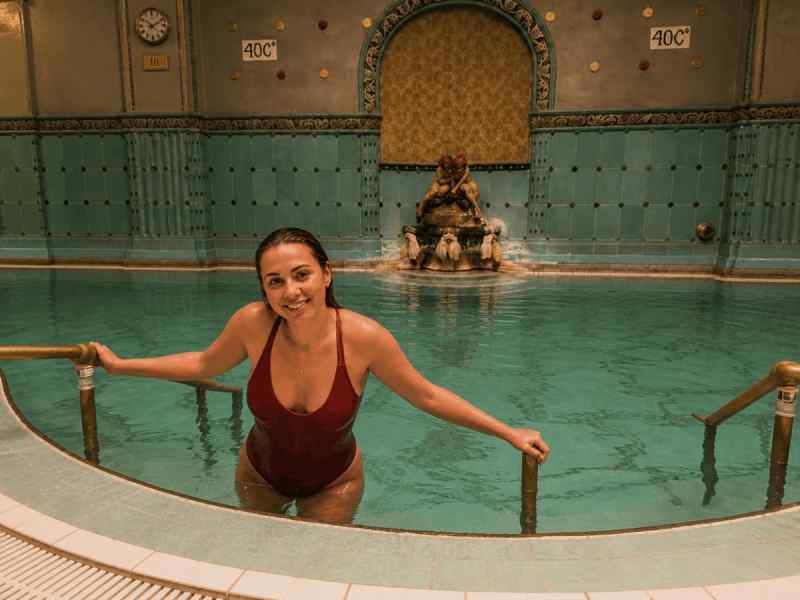
The Gellért Bath, opened in 1918 inside the Hotel Gellért on the Buda side of the Danube, is the most architecturally beautiful bath in Budapest. The main hall is lined with floor-to-ceiling Zsolnay porcelain tiles, stained-glass skylights, marble columns, and mosaic floors, and looks closer to a cathedral than a swimming pool. The complex includes 10 thermal pools, a wave pool (one of the first in Europe, opened in 1927), and an outdoor terrace pool with views toward the Buda Hills.
What Makes It Worth a Soak: Original 1918 fittings still in place throughout. Day entry runs 9,200 to 11,200 HUF (around 23 to 28 euros). The outdoor wave pool runs in season (May to September). Please note: Gellért Bath is closed for renovations until 2028. Check the official site for reopening updates.
What to Know Before You Go: Cabins (private changing rooms) cost about 1,200 HUF more than basic lockers. The main bath hall is co-ed; the side thermal pools were historically gendered but are now mostly mixed on most days. The hotel entrance and bath entrance are different doors; look for the bath sign on Kelenhegyi út. When it reopens, book a cabin rather than a locker. The extra cost is worth it for the original 1918 changing rooms alone.
Find It Here: Kelenhegyi út 4, 1118 Budapest, at the foot of Gellért Hill.
How to Get There: Take tram 19, 41, 47, or 49 to Szent Gellért tér, or metro line M4 to Szent Gellért tér.
3. Rudas Bath
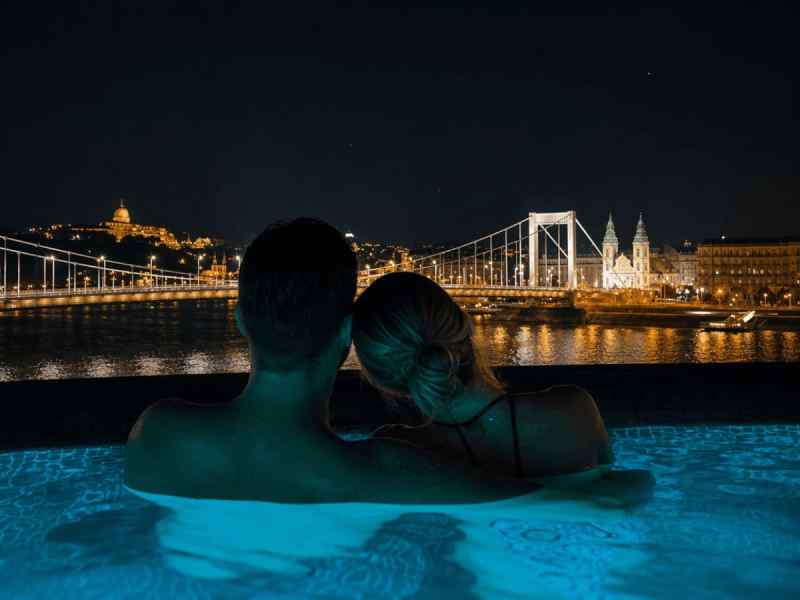
The Rudas Bath, built in 1550 by Pasha Sokollu Mustafa during the Ottoman occupation, is the oldest functioning bath in Budapest. The central octagonal Turkish pool sits under a 10-meter dome with small colored glass openings that throw spots of pink, yellow, and green light onto the steam. In 2014, a modern rooftop pool was added on top of the historic structure, with unobstructed views across the Danube to the Pest side.
What Makes It Worth a Soak: You get both the original 16th-century Ottoman bathing chamber and a 21st-century rooftop pool in one ticket. Day entry runs 6,500 to 13,500 HUF (around 17 to 34 euros) depending on the day and the rooftop add-on.
What to Know Before You Go: The historic Turkish bath downstairs runs single-gender on weekdays (men Monday, Wednesday, Thursday, Friday; women Tuesday) and mixed-gender on weekends. The rooftop pool is always mixed-gender. Night-bath hours run until 4 a.m. on Friday and Saturday nights, and the rooftop at sunset is the local must-do. Arrive for the last hour before closing on a Friday night for the best view with the smallest crowd.
Find It Here: Döbrentei tér 9, 1013 Budapest, on the Buda side at the Elisabeth Bridge.
How to Get There: Take tram 19 or 41 to Rudas Gyógyfürdő, or bus 7 or 8E across the Elisabeth Bridge from Pest.
4. Király Bath
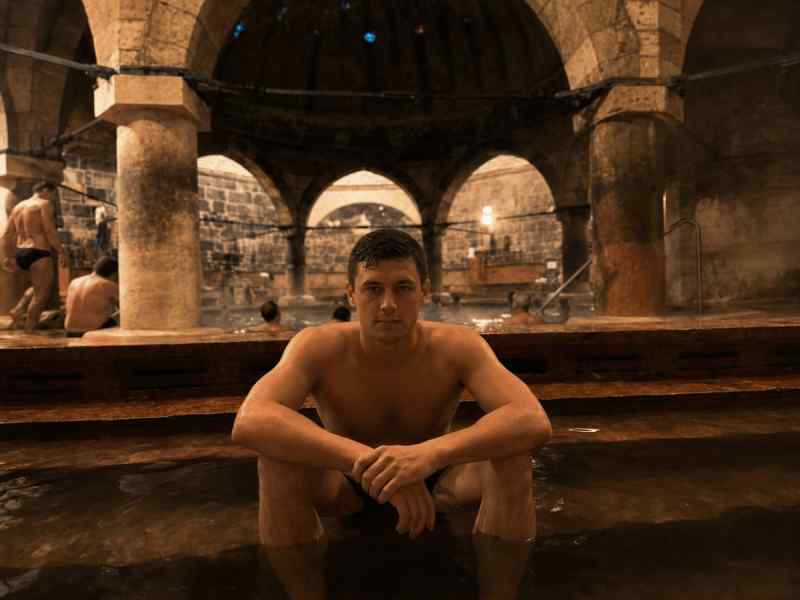
The Király Bath, built between 1565 and 1570 by Pasha Sokollu Mustafa (the same Ottoman official who commissioned Rudas), is the smallest and most atmospheric of Budapest's historic baths. The main octagonal pool sits under a 16-meter Ottoman dome punctuated with the same star-shaped colored openings as Rudas. Unlike most baths, Király was built without its own water source; water is piped in from a spring 800 meters away, which is part of why the building feels so contained and intimate.
What Makes It Worth a Soak: The most intact 16th-century Ottoman bath in Budapest. Day entry runs around 4,000 to 5,500 HUF (10 to 14 euros), one of the cheapest on this list. The bath is small, with around 100 visitors at a time.
What to Know Before You Go: Király has run on alternating gender schedules historically; current scheduling shifts toward mixed-gender days but check the official site the week of your visit. The small steam room and the cold plunge inside the dome are the local must-dos. On a weekday morning, it is rarely more than a handful of visitors under the dome.
Find It Here: Fő utca 84, 1027 Budapest, on the Buda side near the Margaret Bridge.
How to Get There: Take metro line M2 to Batthyány tér, then walk 7 minutes north along Fő utca.
5. Lukács Bath
The Lukács Bath, dating to 1894 in its current form on the site of a medieval bathing tradition, is the local favorite. The complex sits on the Buda side near Margaret Bridge and includes two outdoor swimming pools, four thermal pools, a sauna world, and the famous "wall of gratitude" in the courtyard, where plaques from international visitors thank the water for healing them. It is the bath where Hungarian doctors actually send patients on medical prescriptions covered by national health insurance.
What Makes It Worth a Soak: Local crowd, almost no tour groups, and serious thermal credentials. Day entry runs 5,000 to 6,500 HUF (12 to 16 euros). Doctors hold office hours on site and can prescribe specific water cures.
What to Know Before You Go: The outdoor pools are open year-round. The thermal courtyard is one of the only spots in Budapest where you can read the gratitude plaques (in Hungarian, German, French, Russian, and English) while floating in 38°C water. Tuesday and Thursday mornings are the most local-heavy times.
Find It Here: Frankel Leó út 25-29, 1023 Budapest.
How to Get There: Take tram 17 or 19 to Szent Lukács Gyógyfürdő.
6. Veli Bej Bath
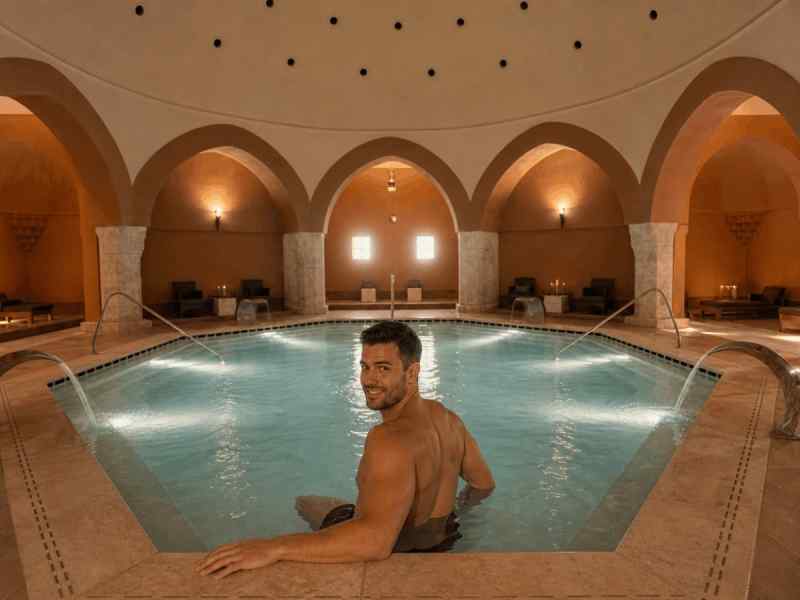
The Veli Bej Bath (Császár Veli Bej Fürdő), built in 1574 by Pasha Sokollu Mustafa and restored in 2010, is the most recently opened of Budapest's historic Ottoman baths. The bath is hidden inside a working Catholic hospital complex (Hospitaller Brothers of St. John) and was closed to the public for 60 years before the restoration. The octagonal central pool sits under a 9-meter Ottoman dome with the same star-shaped colored windows as Rudas and Király, and four smaller pools surround it with temperatures from 21°C to 40°C.
What Makes It Worth a Soak: A 450-year-old Ottoman bath that maxes out at around 80 visitors at a time, with a strict no-photography rule that keeps it calm. Day entry runs around 5,000 HUF (12 euros). The 3-hour ticket option (around 4,000 HUF) is enough for most visitors.
What to Know Before You Go: The entrance is unmarked apart from a small sign reading "Veli Bej Fürdő," and it is accessed through the hospital's side door on Árpád fejedelem útja. Mixed-gender, swimsuit required at all times. The no-photography rule and 80-person capacity mean it stays that way.
Find It Here: Árpád fejedelem útja 7, 1023 Budapest, on the Buda side near Margaret Island.
How to Get There: Take tram 17 or 19 to Császár-Komjádi Sportuszoda. The hospital entrance is a 2-minute walk.
7. Palatinus Strand
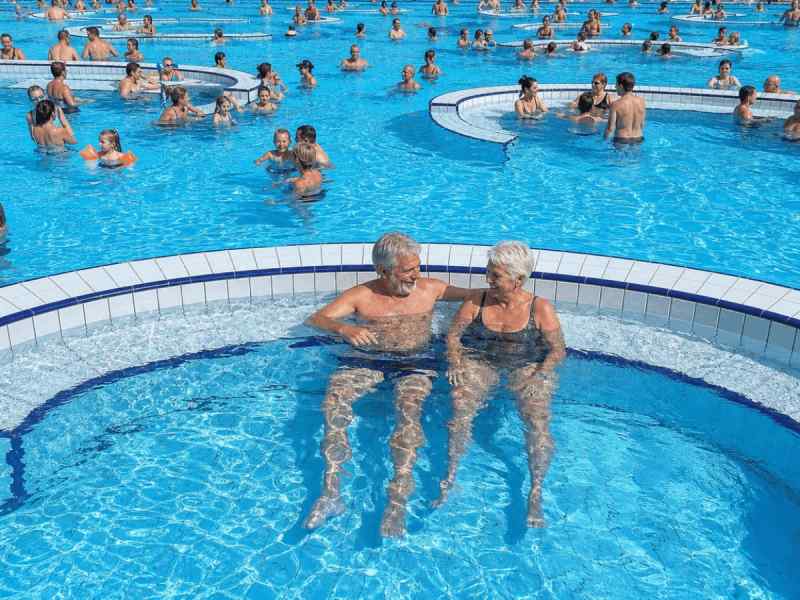
The Palatinus Strand on Margaret Island, opened in 1919, is Budapest's largest outdoor thermal complex. The 7-hectare site includes 11 pools, three of which are thermal, plus a 60-meter water slide, a wave pool, a children's play pool, and large grass lawns for sunbathing. In winter, the indoor thermal section opens with smaller crowds.
What Makes It Worth a Soak: The biggest outdoor thermal complex in Budapest, on a car-free island in the middle of the Danube. Day entry runs around 5,500 HUF in summer (14 euros) and 4,000 HUF off-season. Locker rental adds 500 HUF.
What to Know Before You Go: Margaret Island itself is worth a half-day even without a bath visit, with a Japanese garden, a music fountain that runs hourly, and the ruins of a 13th-century Dominican convent, all part of a longer list of things to do in Budapest worth building into your trip. Rent a bike or pedal-car at the Margaret Bridge entrance. On a summer Sunday, Palatinus is where Budapest actually goes, less a tourist attraction than a city ritual.
Find It Here: Soó Rezső sétány 1, 1138 Budapest, on Margaret Island.
How to Get There: Take tram 4 or 6 to Margitsziget (Margaret Island stop on the bridge), then walk 7 minutes onto the island.
8. Dandár Bath
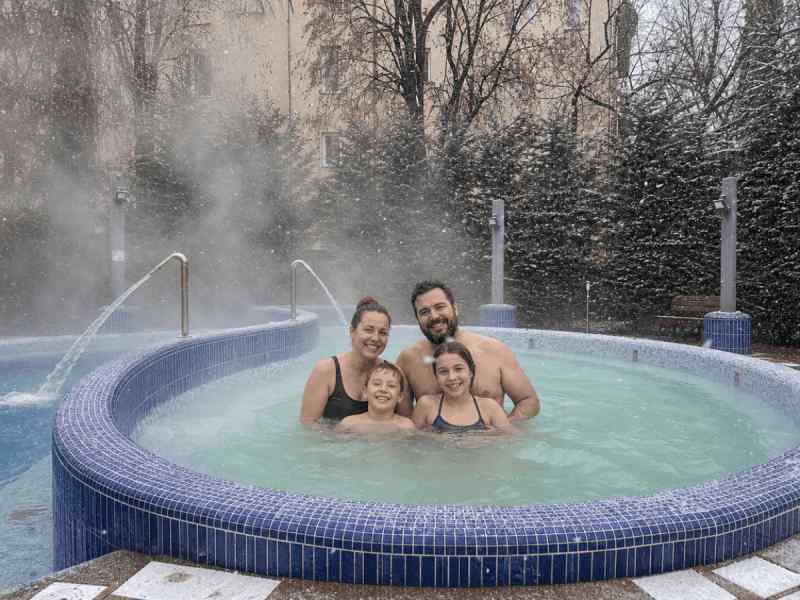
The Dandár Bath, opened in 1930 in the 9th district's industrial Ferencváros neighborhood, is the bath locals send other locals to. There are no tour groups, no English signage in the corridors, no sparties, and the entry price is the lowest in Budapest. The complex has three indoor thermal pools (32°C, 36°C, and 38°C), a small outdoor pool open in summer, a sauna, and a steam room. The building itself is small and unimpressive next to Széchenyi or Gellért.
What Makes It Worth a Soak: The most local, least touristy bath in Budapest. Day entry runs around 3,500 to 4,500 HUF (9 to 11 euros), the lowest on this list. You will be the only non-Hungarian speaker on most days.
What to Know Before You Go: Bring exact change and a basic Hungarian phrase or two; staff speak limited English. The bath closes earlier than the central baths (typically 7 p.m. weekdays, 5 p.m. weekends). Cash only at the front desk. If you want to know what Budapest's bath culture looked like before the tourists arrived, this is the closest you will get, and it's the kind of find that belongs on any list of unique things to do in Budapest that will genuinely surprise you.
Find It Here: Dandár utca 5-7, 1095 Budapest, in Ferencváros.
How to Get There: Take tram 24 to Boráros tér, then walk 8 minutes south, or take bus 23 directly to Dandár utca.

9. Aquaworld Resort Budapest
The Aquaworld Resort Budapest, opened in 2008 on the northern edge of Budapest, is the city's largest indoor waterpark. The complex is built under a 72-meter glass dome (the largest in Europe), with 15 thermal and adventure pools, 11 water slides (including a 153-meter slide that runs through the dome), a wave pool, and a children's play area. The thermal water is drawn from the same regional aquifer that feeds the city center baths.
What Makes It Worth a Soak: Built for families and bigger groups, with the largest collection of slides and play features in the region. Day entry runs around 8,500 to 11,000 HUF for adults (21 to 27 euros) and around 6,500 HUF for kids.
What to Know Before You Go: Aquaworld is 14 km north of the city center, so plan a half-day if you go. The resort runs a free shuttle from Heroes' Square (Hősök tere) several times a day, check the official site for the current schedule. It is not a cultural bath experience, but for families with younger kids it is the most practical full day in Budapest.
Find It Here: Íves út 16, 1044 Budapest.
How to Get There: Take the free shuttle from Heroes' Square, or take suburban train H5 to Budapest-Káposztásmegyer.
Plan Your Budapest Thermal Bath Trip
Budapest rewards a slow bath trip. Three or four days, a morning at Széchenyi, a sunset rooftop soak at Rudas, and an off-the-beaten-path soak at Veli Bej or Dandár add up to a city break that combines spa culture with sightseeing.
Planning a trip to Budapest is easier than most people expect. Great Value Vacations offers curated Hungary vacation packages that take care of the details so you can focus on the experience.