
By Dianne Sindayen ✔ Reviewed by travel expert Ben Braude
Vienna's food culture was built by an empire.
For nearly 650 years, the Habsburg court drew chefs, ingredients, and techniques from Hungary, Bohemia, Italy, and the Balkans.
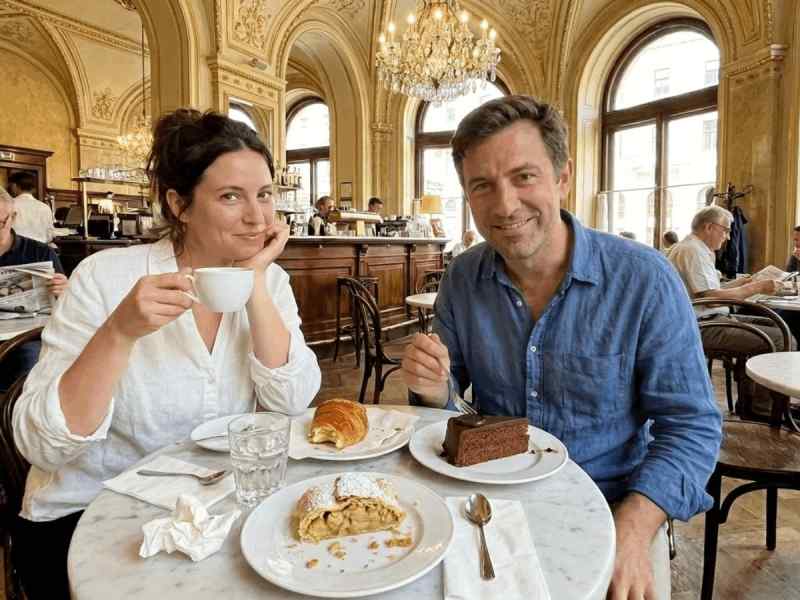
The result is a cuisine that feels both refined and unapologetically hearty. Nine essential Austrian dishes still anchor every traditional Beisl, Kaffeehaus, and Würstelstand in the city, from a thin breaded veal cutlet to a chocolate cake with a 30-year legal battle behind it.
If you want the planning handled, Great Value Vacations offers curated Vienna travel packages that make exploring the Austrian capital easy, flexible, and stress-free.
Why Viennese Cuisine Is Worth a Trip
A few reasons Vienna's food earns its place on a European travel itinerary:
- Imperial heritage: Many of the classics were perfected for the Habsburg court, including Tafelspitz, Backhendl, and Kaiserschmarrn (named for Emperor Franz Joseph).
- Strongest coffee-house culture in Europe: Viennese coffee houses are formally recognized as part of Austria's national Intangible Cultural Heritage, dating back to 1685. They are designed for slow, hours-long visits.
- Cross-cultural roots: Viennese cuisine pulls deeply from Hungarian (goulash, paprika), Czech (dumplings, Knödel), Italian (espresso), and Balkan (ćevapi, Pljeskavica) kitchens, part of a broader spread of delicious Austrian dishes you need to try beyond the capital.
- Traditional Beisl culture is still alive: Beisl (neighborhood taverns) in every district serve traditional Austrian food at honest prices, away from the tourist circuit. Some of Vienna's best dishes are also among its most affordable.
- Affordable compared to Western capitals: A full meal at a traditional Beisl with a glass of wine often runs €15 to €25, well below comparable Paris or Zurich pricing.
Vienna Food at a Glance
A quick reference for matching dishes to your meal slot:
| Dish | Type | Best for | Price |
|---|---|---|---|
| Wiener Schnitzel | Main, veal | The iconic Vienna meal | €€€ |
| Tafelspitz | Main, boiled beef | A multi-course imperial meal | €€€ |
| Wiener Saftgulasch | Main, beef stew | A weekday Beisl lunch | €€ |
| Käsekrainer | Street food, sausage | Late-night quick eats | € |
| Backhendl | Main, fried chicken | A Heuriger or summer lunch | €€ |
| Apfelstrudel | Dessert, pastry | A coffee house break | €€ |
| Sachertorte | Dessert, cake | An iconic Vienna café visit | €€ |
| Kaiserschmarrn | Dessert or light main | Lunch or post-hike | €€ |
| Wiener Melange | Drink, coffee | Any hour in a Kaffeehaus | € |

1. Wiener Schnitzel (Vienna Veal Cutlet)
Wiener Schnitzel is Vienna's most famous dish and, by Austrian law, must be made from veal. A thin cutlet is pounded flat, breaded in flour, egg, and fresh breadcrumbs, then fried in clarified butter or lard until the coating puffs up and slightly separates from the meat. It is traditionally served with a wedge of lemon and a side of warm potato salad or parsley potatoes.
What It Tastes Like: Light, crisp, and surprisingly delicate for a fried dish. The breadcrumb coating "souffles" (puffs up) thanks to the high-heat lard, creating an airy crust around the tender veal. The first bite, when the crust shatters and the veal gives way, is the moment most visitors understand why Viennese argue about this dish with the seriousness of a legal dispute.
What to Pair It With: A glass of Grüner Veltliner, Austria's signature crisp white wine. Sparkling water with lemon is the non-alcoholic standard.
Good to Know: Pork versions are widely available but must be labeled "Wiener Schnitzel vom Schwein" (Wiener schnitzel from pork). The unqualified name "Wiener Schnitzel" is legally reserved for veal.

2. Tafelspitz (Boiled Beef in Broth)
Tafelspitz is boiled beef in clear broth, reportedly the favorite dish of Emperor Franz Joseph I, who ate it almost daily during his 68-year reign. A specific cut of beef (the tritip) is simmered slowly with root vegetables until tender, then sliced and served with the broth, marrow bones, sautéed Rösti potatoes, applesauce with horseradish, and a tangy chive sauce (Schnittlauchsauce).
What It Tastes Like: Subtle and rich, with the texture of slow-cooked beef. Each accompaniment changes the bite, from the sweet-tart applesauce to the pungent chive sauce. It is the kind of dish that rewards patience, both in the cooking and in the eating.
What to Pair It With: A glass of dry Austrian Riesling or a light Heuriger white wine. Sparkling mineral water with lemon is the traditional non-alcoholic pairing.
Good to Know: Tafelspitz is often served as a multi-course event, with the broth as a starter and the sliced beef with sides as the main. The historic place to try it is Plachutta, where Tafelspitz has been the house specialty for decades.

3. Wiener Saftgulasch (Viennese Beef Goulash)
Vienna's Wiener Saftgulasch is the city's version of Hungarian goulash, brought back to Vienna by the Habsburgs. Thick chunks of beef are braised slowly with onions, paprika, garlic, and marjoram until the sauce is dark and glossy. Unlike the Hungarian original, the Viennese version is a hearty stew rather than a soup, and is typically served with a Semmel (Vienna's signature white roll) or Knödel (bread dumplings).
What It Tastes Like: Deep, beefy, and gently spiced with paprika. The Viennese version has less broth and more concentrated sauce than the Hungarian original. Order it on a cold afternoon with a dark Märzen and a Semmel to mop the bowl and it will be one of the better meals of the trip.
What to Pair It With: A pint of dark Austrian beer (Märzen or Dunkel) or a glass of Blaufränkisch red wine.
Good to Know: The dressed-up version called Fiakergulasch comes topped with a fried egg, a slice of pickle, and a sausage. It is named for Vienna's horse-drawn carriage drivers (Fiaker), who once favored this heavier version on long working days.

4. Käsekrainer (Cheese-Stuffed Sausage)
The Käsekrainer is Vienna's most famous street food: a smoked pork sausage stuffed with chunks of cheese (usually Emmental) that melts inside the casing during cooking. The result is a sausage that bursts with hot, gooey cheese when you bite in. It is sold from Würstelstand kiosks, the small late-night sausage stands that have been a Vienna institution since the 18th century.
What It Tastes Like: Smoky, garlicky, and dramatically cheesy. The casing snaps cleanly and the molten cheese flows out. Standing at a Würstelstand at midnight with a Käsekrainer and a cold Ottakringer is as authentically Viennese as anything you will do in the city.
What to Pair It With: A cold Ottakringer Pilsner or a bottle of Stiegl beer from the kiosk's fridge. Spicy sweet Bauernsenf mustard and a slice of dark rye bread (Schwarzbrot) on the side.
Good to Know: The Viennese slang to order it the local way is "Eitrige mit a 16er-Blech und an Buckl": a Käsekrainer with an Ottakringer beer in a 16-ounce can and the heel-end of a rye loaf. Würstelstand workers appreciate hearing it.

5. Backhendl (Vienna Fried Chicken)
Backhendl is Vienna's traditional fried chicken. A young chicken is cut into pieces, dredged in flour, dipped in egg, coated in breadcrumbs, and deep-fried in lard until golden. The dish dates to the 18th century and was a status symbol in imperial Vienna; by the 19th century, it had become the centerpiece of summer outings to the Vienna Woods (Wienerwald).
What It Tastes Like: Crisp, juicy, and lighter than American fried chicken. The skin shatters cleanly thanks to the breadcrumb coating, and the meat stays tender from the egg dredge. Eating it at a Heuriger in the Vienna Woods on a summer afternoon, with a glass of young white wine and the city somewhere below you, is one of those meals that does not translate to a photo.
What to Pair It With: A Heuriger (young wine) from one of Vienna's outer-district wine villages, or a glass of Sturm in autumn.
Good to Know: Backhendl is the imperial-era ancestor of American fried chicken. The breading technique traveled to America with Austrian and German immigrants in the 19th century and became the foundation of Southern fried chicken in the U.S.
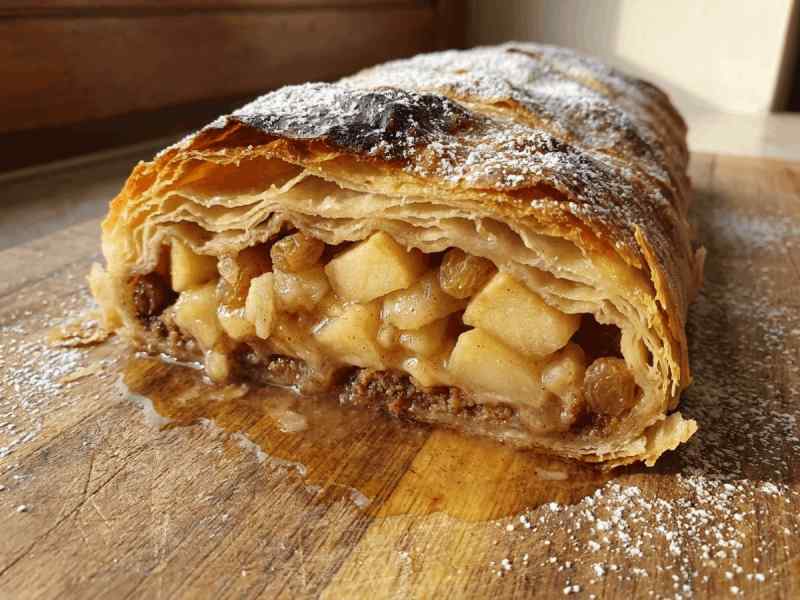
6. Wiener Apfelstrudel (Vienna Apple Strudel)
Wiener Apfelstrudel is the city's signature dessert: paper-thin pastry dough stretched until nearly translucent, wrapped around a filling of spiced apples, cinnamon, raisins, lemon zest, and toasted breadcrumbs, then baked until golden. The pastry technique reached Austria from Turkey via Hungary during Habsburg rule, and was perfected in Vienna's coffee houses.
What It Tastes Like: Light and crisp on the outside, warm and aromatic on the inside. The apples keep a slight bite, and the toasted breadcrumbs absorb juice to prevent a soggy bottom crust. A good Apfelstrudel in a proper Viennese Kaffeehaus, still warm from the oven with a Melange on the side, is a better afternoon than most things you can plan.
What to Pair It With: A Wiener Melange or a small glass of cold milk. A scoop of vanilla ice cream is the modern addition.
Good to Know: A proper Apfelstrudel pastry is stretched by hand on a tablecloth until it is so thin you can read a newspaper through it. The Café Residenz at Schönbrunn Palace runs live strudel-stretching demonstrations daily.

7. Sachertorte (Vienna Chocolate Cake)
Sachertorte is Vienna's most famous chocolate cake: two thin layers of dense dark chocolate sponge with a thin layer of apricot jam between them, all coated in a smooth, slightly bitter dark chocolate glaze. It was invented in 1832 by 16-year-old apprentice chef Franz Sacher for Prince Klemens von Metternich, and has been served at the Hotel Sacher's Café Sacher ever since.
What It Tastes Like: Rich but not overly sweet. A slight bitterness from the dark chocolate is balanced by the tart apricot jam. The cake is famously dense and drier than other chocolate tortes, designed to be eaten with a generous dollop of unsweetened whipped cream (Schlagobers). The whipped cream is not optional. Without it the cake is too dry. With it, it makes complete sense.
What to Pair It With: A Wiener Melange or an Einspänner (espresso topped with whipped cream). The mandatory side of unsweetened whipped cream is itself part of the pairing.
Good to Know: There are two "official" Sachertortes in Vienna: Hotel Sacher's original (with a single layer of jam in the middle) and Demel's version (with the jam directly under the chocolate glaze). The two cafés fought a famous 30-year legal battle over the "Original Sachertorte" trademark, finally settling in 1963.
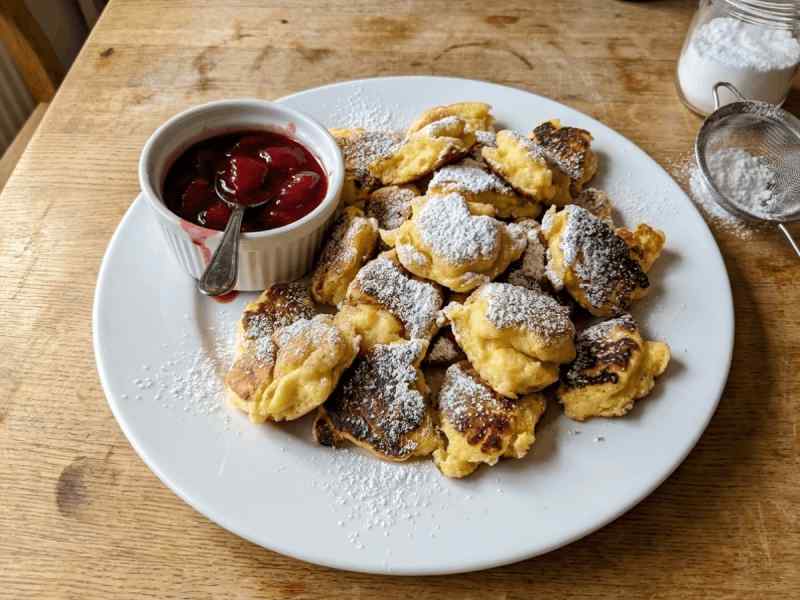
8. Kaiserschmarrn (Emperor's Shredded Pancake)
Kaiserschmarrn is a thick, fluffy shredded pancake dessert named for Emperor Franz Joseph (Kaiser meaning Emperor, Schmarrn meaning scrambled mess). A sweet egg-rich batter is cooked in butter, broken into bite-sized pieces, then dusted with powdered sugar and served with a warm fruit compote, usually Zwetschkenröster (prune compote) or apricot.
What It Tastes Like: Light and airy with crisp caramelized edges. The fruit compote adds a tart counterpoint to the sweet, buttery pancake. It is the kind of dessert that arrives looking too large and disappears faster than you expected.
What to Pair It With: A small glass of Schnaps (Austrian fruit brandy, usually Marillen or Williams) on the side, or a Wiener Melange.
Good to Know: Kaiserschmarrn is one of the few Viennese desserts often served as a main course at lunch, particularly in mountain huts and Heuriger taverns. A full portion is generally shareable for two to three people.

9. Wiener Melange (Vienna Coffee House Culture)
The Wiener Melange is Vienna's signature coffee: a shot of espresso topped with steamed milk and a thick layer of frothed milk, served in a porcelain cup with a small glass of water on the side. It is the centerpiece of Viennese coffee house culture, which dates to 1685 and is recognized as part of Austria's national Intangible Cultural Heritage.
What It Tastes Like: Smooth and well-balanced. The Melange is less foamy than a cappuccino and less rich than a latte, with a clearer espresso flavor. Ordering one in a traditional Kaffeehaus, sitting down with a newspaper and no particular plan, is the most Viennese thing a visitor can do.
What to Pair It With: A slice of Sachertorte, a piece of Apfelstrudel, or a Vanillekipferl (vanilla crescent cookie).
Good to Know: Vienna's traditional Kaffeehäuser, including Café Central, Café Sacher, Café Demel, Café Landtmann, and Café Sperl, are designed for slow, multi-hour visits. Ordering a single Melange entitles you to read the day's newspapers, write a letter, or sit for as long as you like, with no rushing from the waiters.
Taste Vienna Like a Viennese
Traditional Vienna food is meant to be eaten slowly, with a glass of Grüner Veltliner or a Melange in hand. The Habsburg empire left behind a cuisine far richer than its borders, and the best of it still happens at neighborhood Beisl tables and centuries-old coffee houses. Pick four or five of the dishes above, find a Kaffeehaus or Beisl that takes its time, and you will eat better than most visitors to the city.
Planning a trip to Vienna is easier than most people expect. Great Value Vacations offers curated Vienna travel packages that take care of the details so you can focus on the experience.
VIEW VACATION PACKAGES TO VIENNA