By Dianne Sindayen ✔ Reviewed by travel expert Ben Braude
Czech cuisine is hearty, generous, peasant-rooted food built for long Central European winters. Braised meats, dumplings the size of a fist, sour cabbage, dark beer, and sweet fruit dumplings to finish.

The most famous food in Prague is svíčková na smetaně, the country's unofficial national dish, but the best food in Prague stretches far beyond it. This guide covers nine essential Czech dishes, from the classic pub plates to the famous chimney pastries sold all over Old Town.
Planning a trip to Prague is easier than most people expect. Great Value Vacations offers curated Prague travel packages that take care of the details so you can focus on the experience.
Why Czech Food Is Worth the Trip
A few reasons Czech food earns its place on a Prague itinerary:
- It is hearty, comforting, and unapologetically rich: Czech cuisine is peasant cooking elevated by centuries of practice: slow-braised meats, fluffy bread dumplings, and sauces designed to be mopped up to the last drop.
- Bohemia and Moravia have distinct food traditions: Bohemian cooking leans toward beer-friendly meats and dumplings, while Moravian cuisine has more wine, paprika, and Slavic influence.
- Czechs drink more beer per capita than anyone on Earth. About 160 liters of beer per person per year, the highest in the world for over 30 years running. Beer is also one of the cheapest drinks at most restaurants, often cheaper than bottled water.
- Traditional food is genuinely affordable. A full Czech meal with beer in a neighborhood pub usually runs 250 to 400 CZK (roughly $10 to $17), well below comparable Western European capitals.
- Most classics are widely available. You can find every dish below at traditional Czech pubs in Prague's historic center, with no special reservations needed.
Czech Food at a Glance
A quick reference for matching dishes to your mood and meal slot:
| Dish | Type | Best for | Price |
|---|---|---|---|
| Svíčková na smetaně | Main, beef | A sit-down national meal | $$ |
| Vepřo knedlo zelo | Main, pork | Classic Czech lunch | $$ |
| Czech Goulash | Main, beef stew | Pub dinner with beer | $$ |
| Pečená kachna | Main, poultry | Sunday dinner | $$$ |
| Smažený sýr | Snack, cheese | Pub bites, quick meals | $ |
| Bramboračka | Soup, vegetarian | A warm-up starter | $ |
| Trdelník | Sweet, pastry | Street snack | $ |
| Czech Pilsner | Drink, beer | Pairing with any meal | $ |
| Ovocné knedlíky | Sweet, dumpling | A traditional dessert | $ |

1. Svíčková na smetaně (Marinated Beef in Cream Sauce)
Svíčková na smetaně is widely considered the Czech Republic's national dish. Slices of slow-braised beef sirloin are served in a thick, velvety sauce made from root vegetables (carrot, parsnip, celery root) blended with cream and a hint of lemon, alongside fluffy bread dumplings to soak up the sauce.
What It Tastes Like: Silky and slightly sweet. The sauce has a faint tartness from the lemon and a mild earthiness from the root vegetables, balanced by the richness of the cream. The beef is meltingly tender after a long slow braise. The first spoonful of sauce with a piece of dumpling is the moment most visitors understand why Czechs consider this their national dish.
What to Pair It With: A light Czech lager is traditional, but a glass of Moravian white wine works equally well. Czech mineral water (Mattoni or Magnesia) is a good non-alcoholic pairing.
Good to Know: Svíčková is traditionally served with a dollop of whipped cream and a slice of orange or a spoonful of cranberry sauce on top. It surprises most foreign visitors, but the combination of cold cream and tart fruit against the warm savory sauce is the whole point.
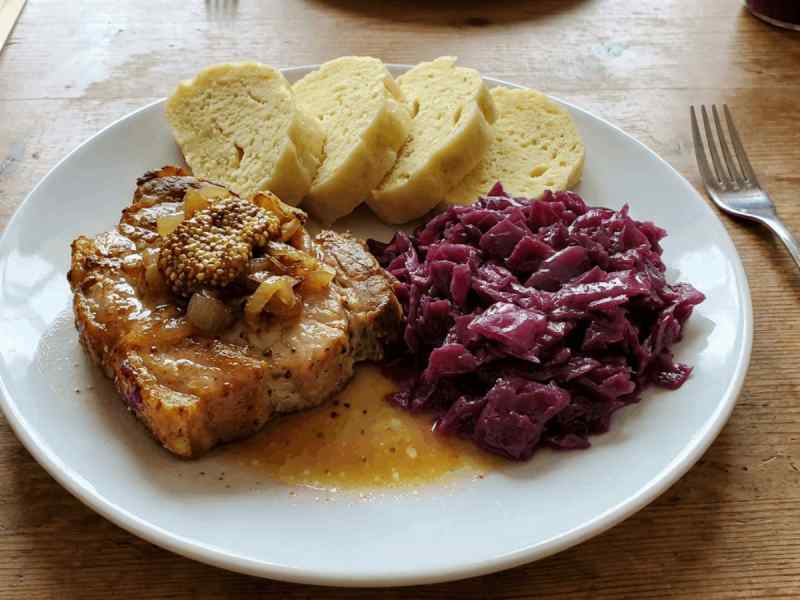
2. Vepřo knedlo zelo (Roast Pork with Dumplings and Sauerkraut)
Vepřo knedlo zelo, often shortened from vepřové, knedlíky, zelí, is the most quintessential Czech meal. It consists of roast pork shoulder or belly served with bread dumplings and stewed sauerkraut. The three components are the foundation of Bohemian comfort food.
What It Tastes Like: The pork is fatty and savory, the dumplings are soft and slightly sweet, and the sauerkraut adds a tangy counterpoint that cuts through the richness. Some restaurants serve a sweeter "white" cabbage instead of full sauerkraut. It is the kind of meal that makes a cold afternoon in Prague feel like exactly where you should be.
What to Pair It With: A dark Czech lager such as Kozel or Krušovice Černé. The malt sweetness pairs beautifully with the salty pork and tart cabbage.
Good to Know: There are two styles of dumplings on the plate: bread dumplings (houskové) and potato dumplings (bramborové). Bread dumplings are the traditional choice and are sliced from a loaf-shaped boiled bread roll.

3. Czech Goulash (Hovězí Guláš)
Czech goulash is a beef stew of Hungarian origin that became deeply Czech over centuries of shared empire. Beef is braised slowly with onions, paprika, garlic, and beer until the sauce is dark and glossy, then served over a bed of sliced bread dumplings.
What It Tastes Like: Deep, beefy, and gently spiced. Czech goulash is far less paprika-forward than the Hungarian version, with a thicker sauce and a slight bitterness from the dark beer used in the braise. Order it at a pub on a rainy afternoon with a half-liter of pilsner and it will be one of the better meals of the trip.
What to Pair It With: A pint of Pilsner Urquell or any pale Czech lager. Goulash is also the most reliable pub dish on rainy afternoons, so it pairs naturally with a window seat and a long sit.
Good to Know: In Prague, goulash is often called a "Bohemian goulash" or "Brno-style goulash" depending on the recipe. Both are similar; the main difference is how much onion and how much beer goes in.
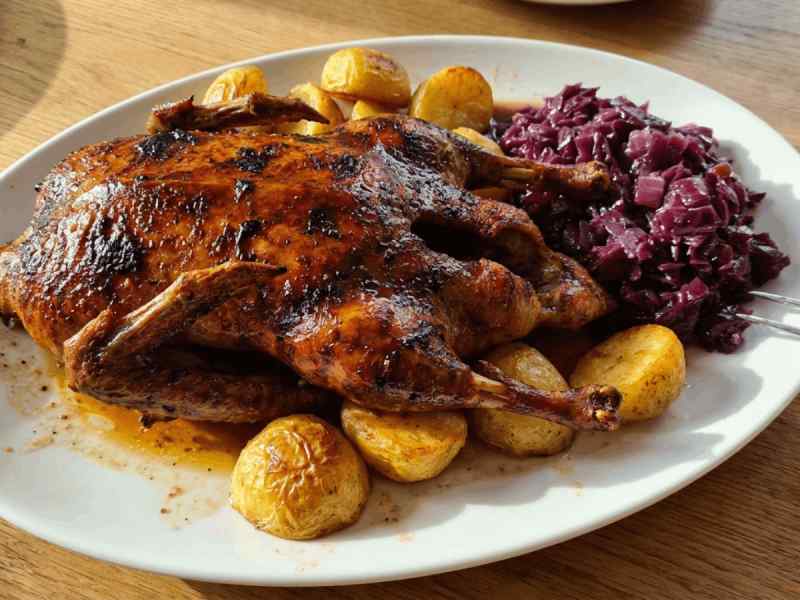
4. Pečená Kachna (Czech Roast Duck)
Pečená kachna is the traditional Czech Sunday dinner. A whole duck is slow-roasted for several hours until the skin is mahogany-dark and crispy, then served with red braised cabbage and a duo of bread and potato dumplings. The fat from the skin is poured over everything before serving.
What It Tastes Like: Rich and slightly gamey, with a crackling skin and meltingly tender meat. The sweet-and-sour red cabbage cuts the richness, and the dumplings soak up the duck fat. It is one of the most indulgent dishes in Czech cuisine. The skin should shatter when you cut into it. If it does not, the duck has not been roasted long enough.
What to Pair It With: A semi-dark Czech lager (polotmavé) or a fuller-bodied dark beer. Moravian red wine also works well, especially a Frankovka or Saint Laurent.
Good to Know: Many traditional restaurants serve duck only on Sundays, or require a phone call ahead of time. The full bird usually feeds two people generously.
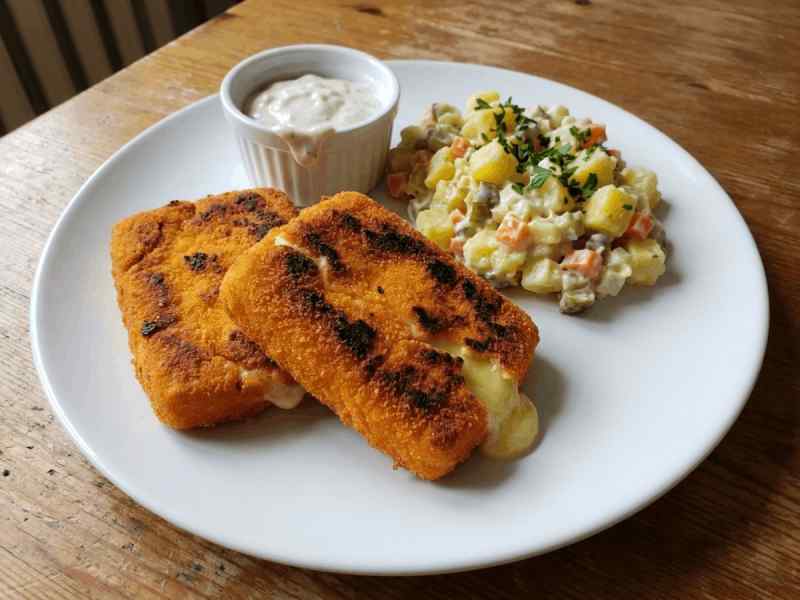
5. Smažený Sýr (Czech Fried Cheese)
Smažený sýr is the unofficial Czech pub snack: a thick slab of Edam, Eidam, or Hermelín cheese, breaded in flour, egg, and breadcrumbs, then deep-fried until the outside is crisp and the inside is molten. It is served with boiled potatoes or fries, and traditionally a side of tartar sauce.
What It Tastes Like: Salty, gooey, and gloriously bad for you. The breadcrumb shell cracks open to reveal a stretch of melted cheese, and the tartar sauce adds tangy contrast. It is not sophisticated but it is exactly what it promises, and that is the whole point.
What to Pair It With: A cold pilsner is the textbook answer. The carbonation cuts through the fat and reset your palate between bites.
Good to Know: Smažený sýr is one of the cheapest meals in Prague, often under 150 CZK. It is also one of the few traditional Czech dishes that is automatically vegetarian.

6. Bramboračka (Czech Potato Soup)
Bramboračka is the most reliable vegetarian-friendly traditional Czech dish. Ask "bez masa" ("without meat") if you want to confirm the version served does not include the smoked meat option. Language is rarely a barrier either way, since the Czech Republic is one of the countries where English travels well, especially in Prague's restaurants and pubs.
What It Tastes Like: Warm and earthy. The marjoram gives it a distinct herbal note that you will not find in other potato soups, and the mushrooms add depth. The optional smoked meat adds a salty, hammy edge. It is the soup that makes you understand why Czech grandmothers have been making it for centuries.
What to Pair It With: Czech rye bread on the side if it is not already served in the bread bowl. A light pilsner cuts the richness.
Good to Know: Bramboračka is the most reliable vegetarian-friendly traditional Czech dish. Ask "bez masa" ("without meat") if you want to confirm the version served does not include the smoked meat option.

7. Trdelník (Chimney Pastry)
Trdelník is the sweet rolled pastry sold from kiosks all over Prague's Old Town and Charles Bridge. Dough is wrapped around a wooden spit, roasted over coals until crisp, then rolled in sugar, cinnamon, or crushed nuts. Modern Prague versions are often filled with ice cream, Nutella, or fresh fruit.
What It Tastes Like: Sweet, warm, slightly caramelized on the outside, and soft in the middle. With ice cream inside, it is rich and indulgent. Without, it is closer to a cinnamon-sugar churro. Best eaten immediately off the spit while it is still warm enough to burn your fingers slightly.
What to Pair It With: Trdelník is meant to be eaten on the go. A coffee from a nearby café is the most natural pairing.
Good to Know: Trdelník is not actually a Czech invention. It originated in Slovakia, Romania, and Hungary, and only became widely sold in Prague in the last 20 years as a tourist food. Czechs themselves rarely eat it. That said, it is still tasty and worth one stop on a walk through Old Town.
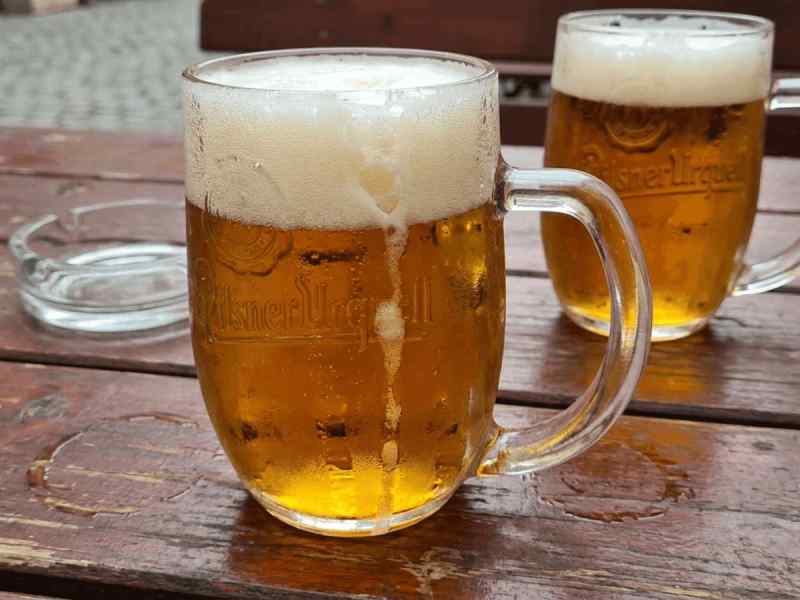
8. Czech Pilsner (Plzeňské Pivo)
Czech pilsner is not just a drink, it is the foundational beer style of the modern world. The original pilsner, Pilsner Urquell, was first brewed in Plzeň in 1842 and went on to define what most of the world thinks of as "beer." It is light gold, crisply bitter, and noticeably hoppier than the imitations brewed elsewhere.
What It Tastes Like: Crisp, lightly bready, and noticeably bitter at the finish. A proper Czech pilsner has a thick, creamy foam head poured to about three fingers, achieved by tilting the glass and topping with a slow foam pour. The first sip in a Prague pub, poured properly, is genuinely different from anything you have had under that name anywhere else.
What to Pair It With: Almost anything. Czech pilsner is the universal pairing in Czech cuisine, but it works especially well with smažený sýr, goulash, and roast pork.
Good to Know: Czechs drink about 160 liters of beer per person per year, the highest per-capita consumption in the world for over 30 years running. In most pubs, a half-liter glass of draft pilsner costs less than a soft drink or bottled water.

9. Ovocné Knedlíky (Czech Fruit Dumplings)
Ovocné knedlíky are the classic Czech dessert: pillowy dumplings made from quark or potato dough, wrapped around a whole piece of fruit (strawberries, plums, apricots, or blueberries), boiled, and served topped with melted butter, sugar, and sweetened curd cheese (tvaroh).
What It Tastes Like: Soft, sweet, and surprisingly light. The fruit bursts when you cut into the dumpling, releasing warm juice that mixes with the melted butter and curd cheese on top. In summer when the plums are in season it is one of the best things you will eat in Prague, main course or dessert.
What to Pair It With: A Moravian dessert wine, a glass of cold milk, or just a strong espresso. Some Czechs eat fruit dumplings as a main course rather than dessert.
Good to Know: In Czech tradition, fruit dumplings can absolutely be served as a main course, especially in summer when the fruit is in season. Two or three large dumplings constitute a full meal.
Taste Prague Like a Local
Czech cuisine is generous, affordable, and built to be eaten slowly with a glass of beer in hand. The best food in Prague is not at the rooftop tourist restaurants. It is at the wood-paneled neighborhood pubs where the goulash has been on the menu since before your grandparents were born and the pilsner is poured properly with a thick foam head. Pick three or four of the dishes above, find a pub that takes its time, and you will eat better than half the visitors to Prague.
If you are ready to plan the trip, Great Value Vacations offers curated Prague travel packages that make exploring the Czech capital easy, flexible, and stress-free.
VIEW VACATION PACKAGES TO PRAGUE
Frequently Asked Questions
Is it customary to tip in Prague restaurants?
Are vegetarian and vegan options easy to find in Prague?
Where do locals actually eat in Prague?
What do Czechs eat for breakfast?
Czech culture treats lunch as the main meal of the day. Most traditional pubs offer a daily lunch special (denní menu) between 11 a.m. and 2 p.m. that includes soup, a main course, and sometimes a drink for roughly 150 to 200 CZK. It is the best value meal in Prague and most tourists miss it entirely.